
San Bartolomé Monumental Route
A Heritage to Discover
San Bartolomé Monumental Route
A Heritage to Discover

For all ages

Discover San Bartolomé together

Cultural and heritage interest
Discover the Essence of San Bartolomé: A Journey Through its Iconic Monuments
Discover the Essence of San Bartolomé: A Journey Through its Iconic Monuments
Immerse yourself in the cultural richness of San Bartolomé, where every corner tells the story of past generations.
The route “A Heritage to Discover” invites you to explore a unique path through the main monuments of San Bartolomé, revealing the best-kept secrets and architectural gems that have withstood the test of time.
From the majesty of the Church of San Bartolomé to the imposing Casa del Mayor Guerra, this experience will immerse you in the very essence of this town, where tradition intertwines with modernity.
Join us on this journey, where you will not only discover the beauty of its iconic monuments but also the vibrant essence of local life.
Prepare for a walk that awakens all your senses and leaves an unforgettable mark on your heart!
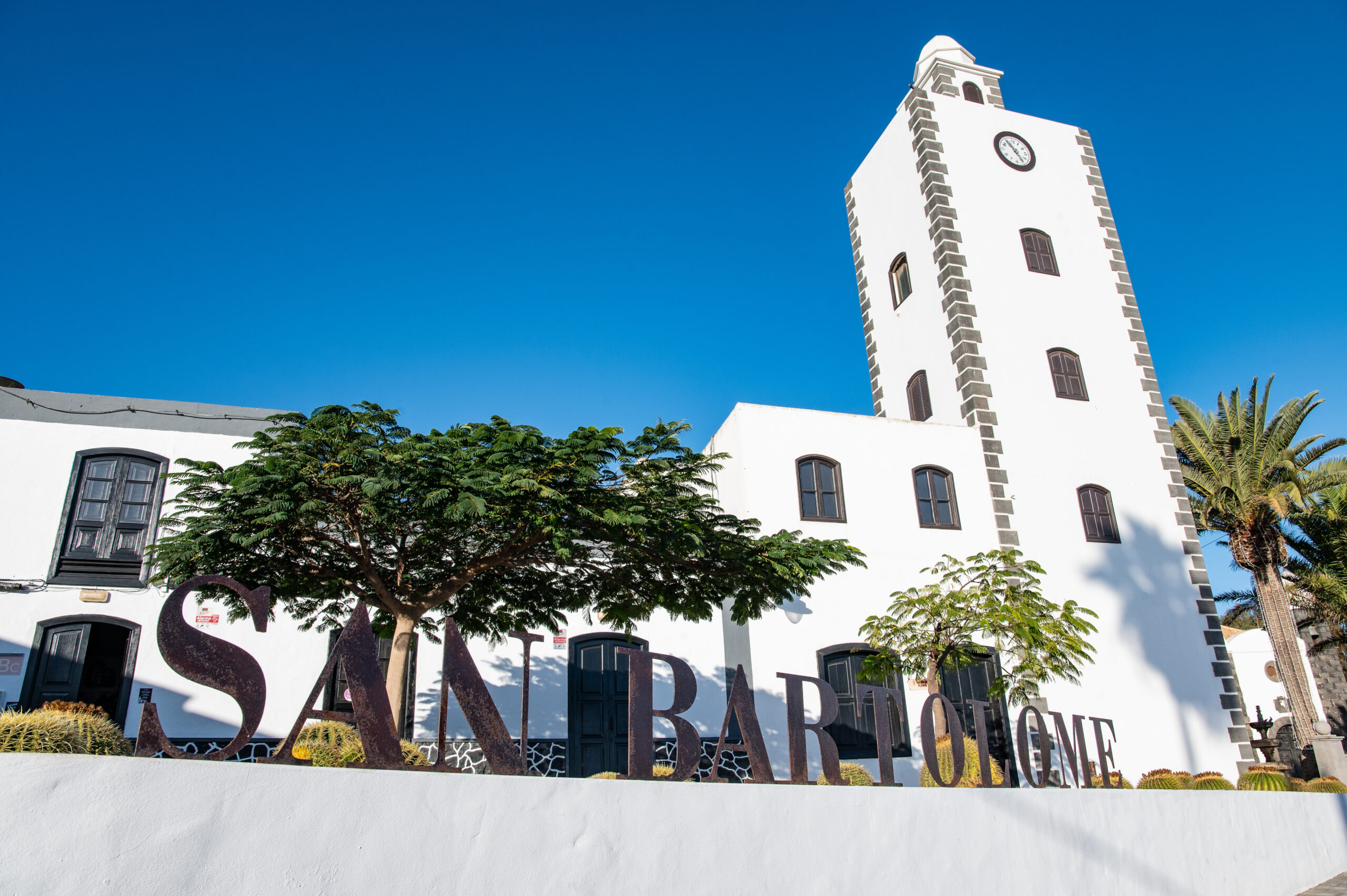
A Heritage to Discover
Monumental Route
Estimated Duration: approx. half day
Landmark #1
Plaza León y Castillo
Plaza León y Castillo, San Bartolomé, Lanzarote (how to get there)
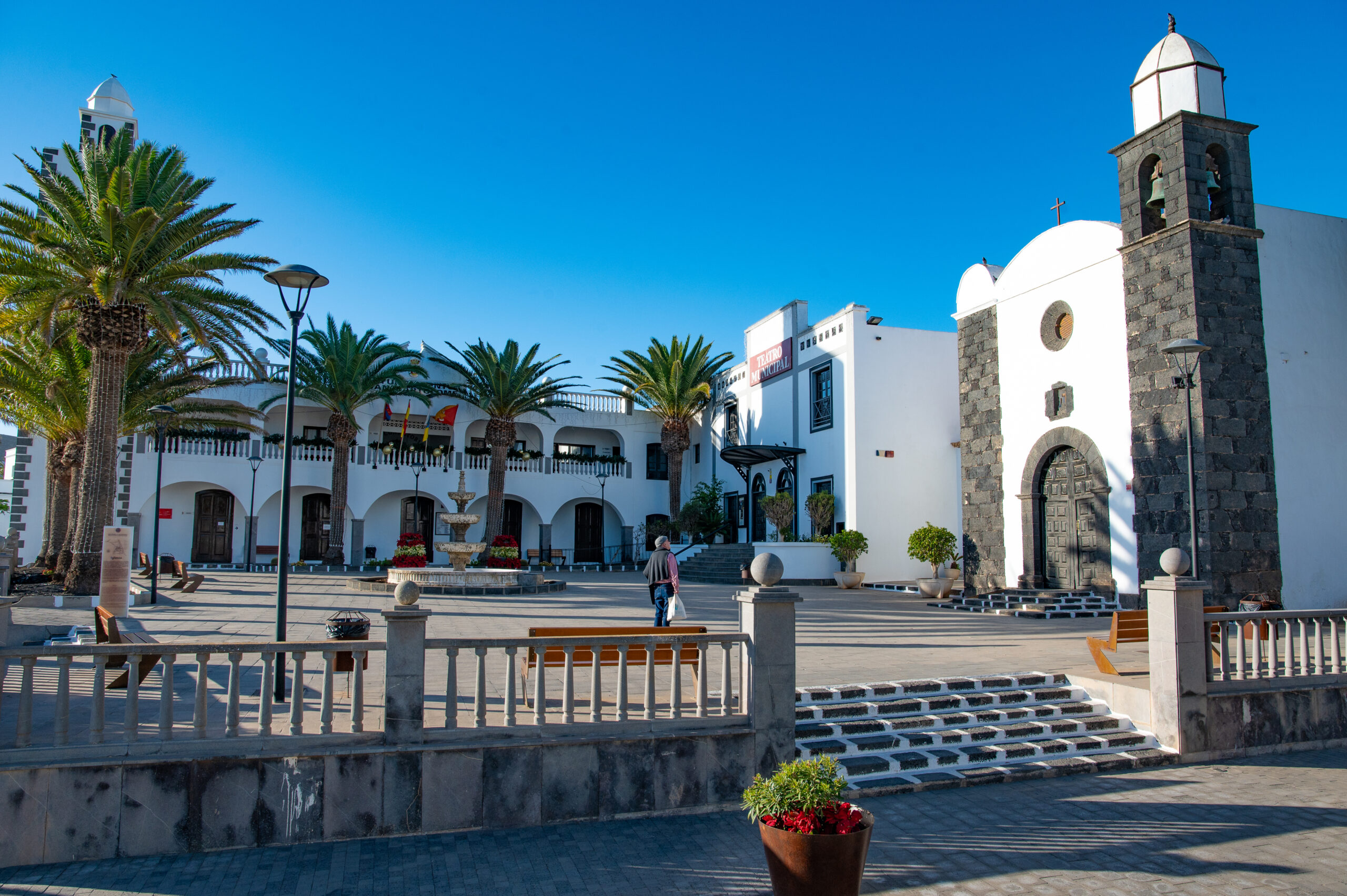
The Plaza León y Castillo is an iconic architectural gem in the heart of San Bartolomé. Its transformation began in 1903, when the central area was paved. Over the years, the square has undergone various renovations, incorporating details such as balustrades, tiled avenues, and gardens, creating a visually captivating environment.
At one end of the square stands the San Bartolomé Town Hall, a building that tells the story of the municipality through its distinctive architecture. This historic structure has witnessed the community’s evolution and remains a symbol of local identity.
Opposite, the Municipal Theater adds a unique cultural dimension to the square. Initially known as the “Parish Cinema,” the San Bartolomé Municipal Theater is a cultural jewel whose history dates back to 1961, when the progressive vision of Father Macario Manuel Déniz Ojeda, alongside the enthusiasm of the community, gave life to this versatile space for films and cultural events. The theater was built on the site of the old cemetery, and the project was a community effort, with neighbors contributing both financially and through manual labor. Despite challenges, such as the collapse of a wall in 1962, the theater partially opened in 1965. However, after a devastating fire in the 1980s, the Town Hall acquired the building and restored it, and the theater was reopened in 1999 with a capacity of 420 people, becoming a vibrant cultural center in San Bartolomé.
The Plaza León y Castillo thus becomes a meeting point not only in a physical sense but also as a historical and cultural landmark, where visitors and residents alike can immerse themselves in the rich heritage of San Bartolomé, exploring its layers of history and connecting with the living essence of this charming town in Lanzarote.
Did you know…?
The fact that the town of San Bartolomé rallied together to restore the Municipal Theater after its fire in the 1980s shows the emotional connection and value this building holds for the local community. This theater is not just a cultural venue; it stands as a living testament to the effort and dedication of a community towards the arts and the preservation of its heritage.
Landmark #1
Plaza León y Castillo
Plaza León y Castillo, San Bartolomé, Lanzarote (how to get there)
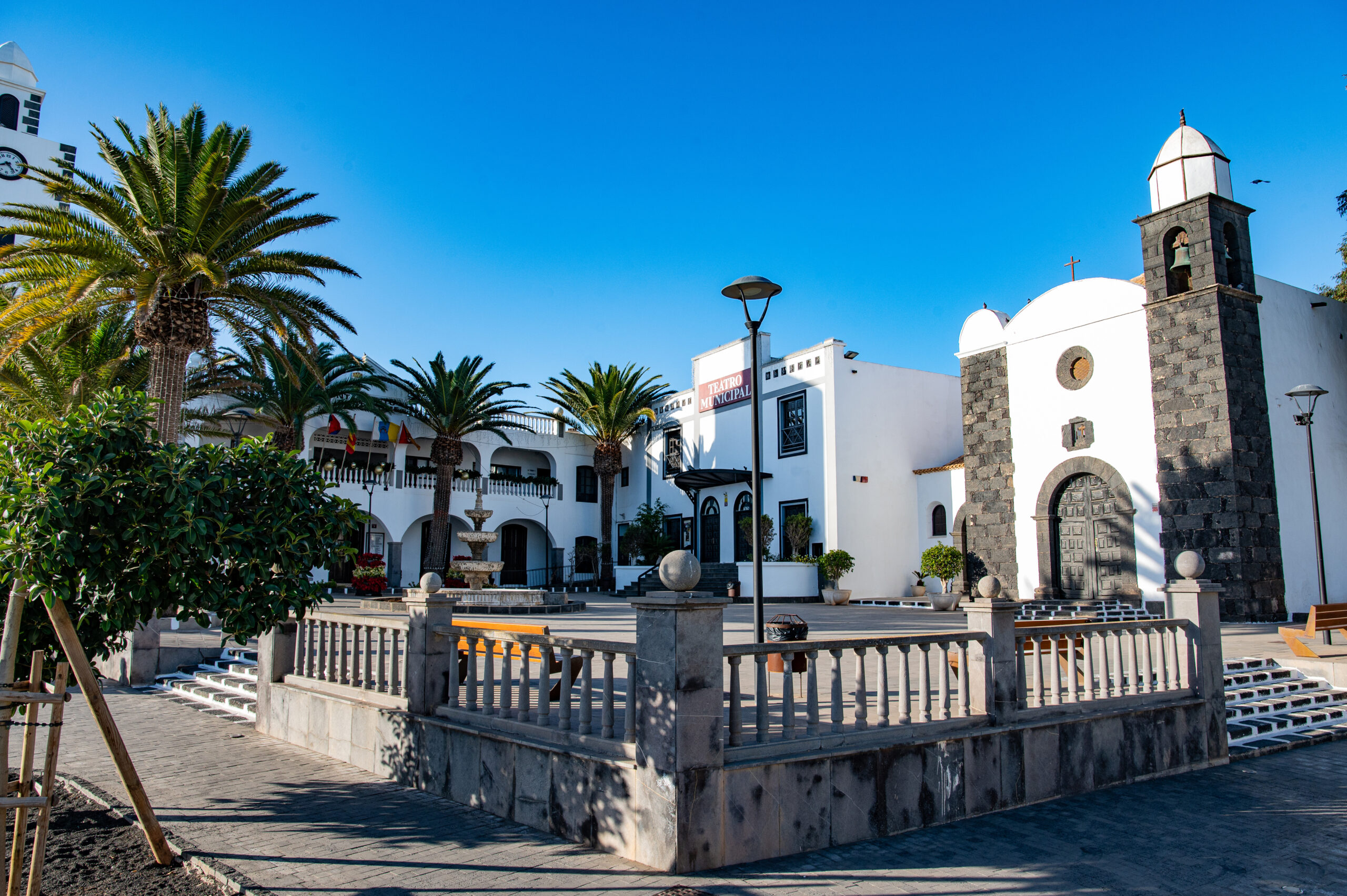
The Plaza León y Castillo is an iconic architectural gem in the heart of San Bartolomé. Its transformation began in 1903, when the central area was paved. Over the years, the square has undergone various renovations, incorporating details such as balustrades, tiled avenues, and gardens, creating a visually captivating environment.
At one end of the square stands the San Bartolomé Town Hall, a building that tells the story of the municipality through its distinctive architecture. This historic structure has witnessed the community’s evolution and remains a symbol of local identity.
Opposite, the Municipal Theater adds a unique cultural dimension to the square. Initially known as the “Parish Cinema,” the San Bartolomé Municipal Theater is a cultural jewel whose history dates back to 1961, when the progressive vision of Father Macario Manuel Déniz Ojeda, alongside the enthusiasm of the community, gave life to this versatile space for films and cultural events. The theater was built on the site of the old cemetery, and the project was a community effort, with neighbors contributing both financially and through manual labor. Despite challenges, such as the collapse of a wall in 1962, the theater partially opened in 1965. However, after a devastating fire in the 1980s, the Town Hall acquired the building and restored it, and the theater was reopened in 1999 with a capacity of 420 people, becoming a vibrant cultural center in San Bartolomé.
The Plaza León y Castillo thus becomes a meeting point not only in a physical sense but also as a historical and cultural landmark, where visitors and residents alike can immerse themselves in the rich heritage of San Bartolomé, exploring its layers of history and connecting with the living essence of this charming town in Lanzarote.
Did you know…?
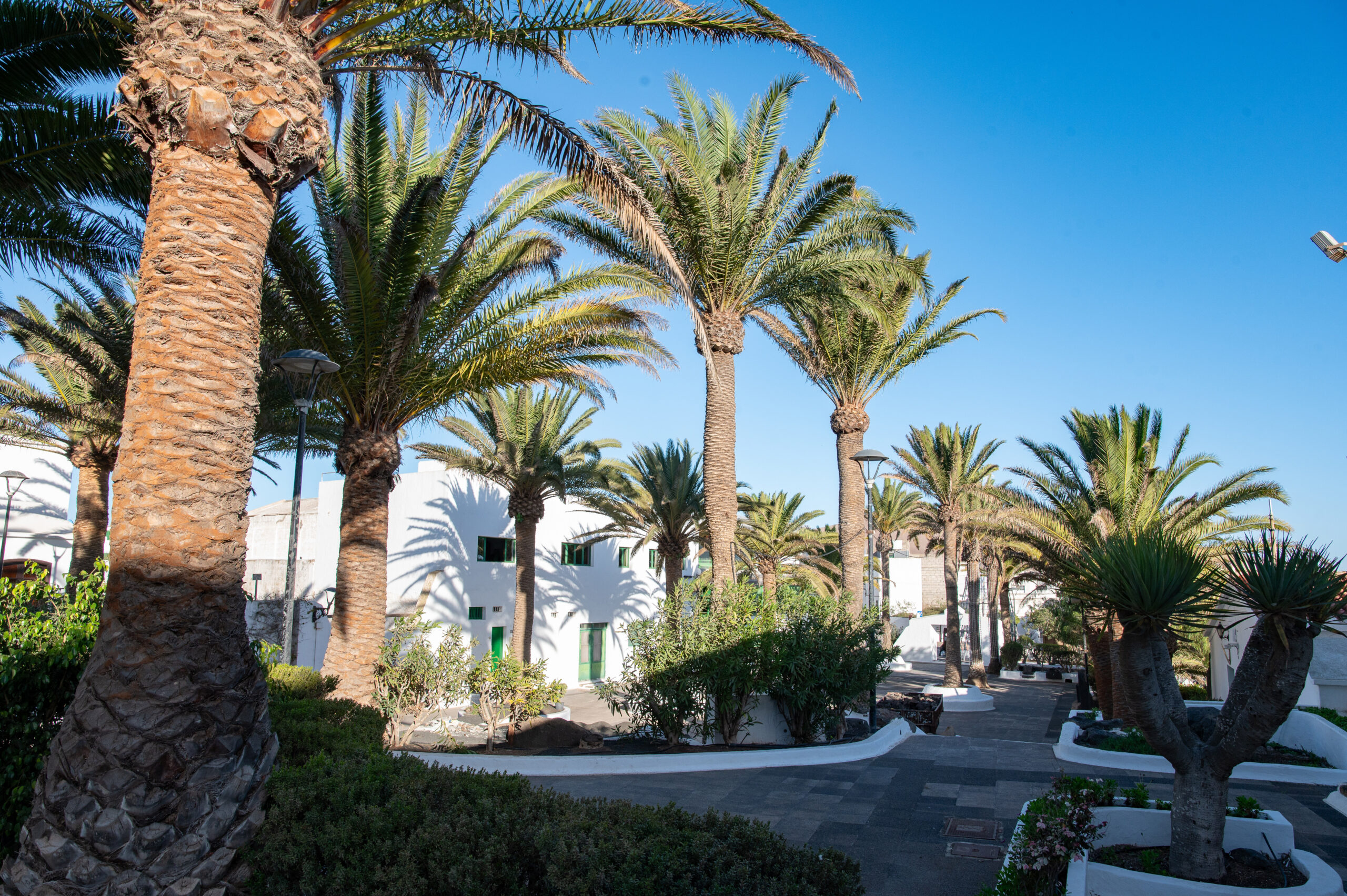
The fact that the town of San Bartolomé rallied together to restore the Municipal Theater after its fire in the 1980s shows the emotional connection and value this building holds for the local community. This theater is not just a cultural venue; it stands as a living testament to the effort and dedication of a community towards the arts and the preservation of its heritage.
Landmark #2
Church of San Bartolomé
Plaza León y Castillo 6, San Bartolomé (how to get there)
50 m / 1 min from Landmark #1 (Plaza León y Castillo)
The Church of San Bartolomé is an architectural gem that has stood as a silent witness to the rich history of this charming town. Its construction began in 1779 and was completed in 1783. The imposing Canarian-style structure has endured the passage of time, becoming a symbol of local devotion and cultural heritage. Francisco Tomás Guerra, known as Mayor Guerra, played a key role in the construction process, leading the local community to expand the existing chapel into what is now the church.
This monument reflects the traditional architectural style of Canarian churches from the 18th century. The façade, simple yet elegant, is marked by a square bell tower that adds grandeur to the town’s skyline. The church was built with modest materials, and its design exemplifies the local craftsmanship of the era.
Inside, the baroque altarpiece stands out as one of the church’s most important features, adorned with sacred paintings that depict biblical stories. The church houses several valuable sculptures, including the Image of San Bartolomé, the Crucified Christ, and Our Lady of Sorrows, all of which are of significant religious and artistic value.
The Church of San Bartolomé is one of the most important religious buildings on the island. It preserves elements of historical significance and has served as a place of worship for the local community for more than two centuries. The church continues to play a vital role in the religious and cultural life of San Bartolomé, making it a key monument for both locals and visitors alike.
Did you know…?
A little-known fact about the Church of San Bartolomé is the local oral history that says that it once had a bell affectionately called the “Bell of Wishes”. According to local folklore, this bell was believed to have special powers. People from the town would ring the bell with the hope that their deepest wishes would come true. The tradition of ringing the bell became so popular that it drew attention from other parts of the island.
This charming piece of local folklore adds an additional layer of community connection to the church that goes beyond its architectural and religious significance.
Landmark #2
Church of San Bartolomé
Plaza León y Castillo 6, San Bartolomé (how to get there)
50 m / 1 min from Landmark #1 (Plaza León y Castillo)
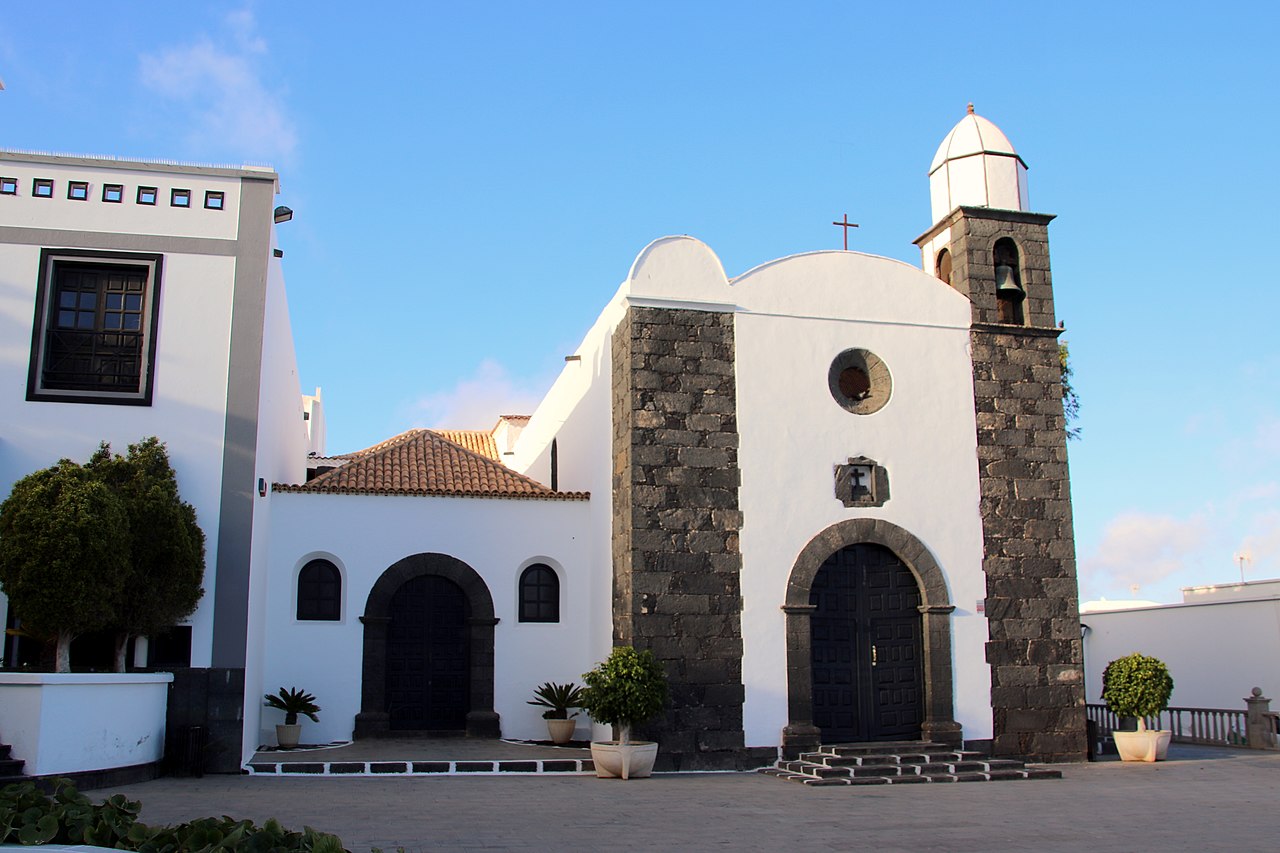
The Church of San Bartolomé is an architectural gem that has stood as a silent witness to the rich history of this charming town. Its construction began in 1779 and was completed in 1783. The imposing Canarian-style structure has endured the passage of time, becoming a symbol of local devotion and cultural heritage. Francisco Tomás Guerra, known as Mayor Guerra, played a key role in the construction process, leading the local community to expand the existing chapel into what is now the church.
This monument reflects the traditional architectural style of Canarian churches from the 18th century. The façade, simple yet elegant, is marked by a square bell tower that adds grandeur to the town’s skyline. The church was built with modest materials, and its design exemplifies the local craftsmanship of the era.
Inside, the baroque altarpiece stands out as one of the church’s most important features, adorned with sacred paintings that depict biblical stories. The church houses several valuable sculptures, including the Image of San Bartolomé, the Crucified Christ, and Our Lady of Sorrows, all of which are of significant religious and artistic value.
The Church of San Bartolomé is one of the most important religious buildings on the island. It preserves elements of historical significance and has served as a place of worship for the local community for more than two centuries. The church continues to play a vital role in the religious and cultural life of San Bartolomé, making it a key monument for both locals and visitors alike.
Did you know…?
A little-known fact about the Church of San Bartolomé is the local oral history that says that it once had a bell affectionately called the “Bell of Wishes”. According to local folklore, this bell was believed to have special powers. People from the town would ring the bell with the hope that their deepest wishes would come true. The tradition of ringing the bell became so popular that it drew attention from other parts of the island.
This charming piece of local folklore adds an additional layer of community connection to the church that goes beyond its architectural and religious significance.
Landmark #3
Casa del Mayor Guerra
C. Serpiente, San Bartolomé, Lanzarote (how to get there)
750 m / 11 min from Landmark #2 (Church of San Bartolomé)
The Casa del Mayor Guerra, declared a Cultural Interest Monument, is an 18th-century historical and cultural treasure in San Bartolomé. Located on the southern slope of Montaña de la Cruz, it marks the point where the town opens towards Montaña Blanca and Tías. This impressive house originally belonged to Francisco Tomás Guerra Clavijo y Perdomo, known as Mayor Guerra, a prominent figure in Lanzarote’s history. He was a military leader, a landowner, and played a significant role in the island’s political and economic development during the late 18th and early 19th centuries.
Legend has it that Mayor Guerra chose this location strategically so that he could oversee the surrounding roads leading to other towns. From this vantage point, he could control the movement of goods and people, reinforcing his influence over the region. The house became a hub for political and economic decisions, making it an important focal point in the community’s history.
Architecturally, Casa del Mayor Guerra showcases the distinctive features of traditional Canarian houses from the 18th century, with thick walls made of volcanic stone and large, high-ceilinged rooms. The house has retained many of its original elements, including its stone façades and wooden balconies, which reflect the craftsmanship of the period. Visitors will notice the simplicity and elegance of its design, which was typical of the grand houses of the Canarian elite during this era.
Inside, the house preserves a number of period details, and its layout is a testament to the functional design of the time. The Casa del Mayor Guerra was not just a residence; it was a symbol of power and prestige in Lanzarote, and its historical significance extends beyond its walls.
Today, Casa del Mayor Guerra remains an essential monument for understanding the socio-political history of San Bartolomé and Lanzarote. It stands as a testament to the legacy of one of the island’s most influential figures, offering visitors a glimpse into a pivotal period in the island’s history.
Did you know…?
Local legends tell of secret tunnels that supposedly connected Casa del Mayor Guerra to other important buildings in the town. These tunnels, while never proven to exist, were said to be used by Mayor Guerra to move discreetly between his home and strategic locations in San Bartolomé. Although no physical evidence of these tunnels has been found, the story continues to fascinate locals and adds an air of mystery to the house’s history.
Landmark #3
Casa del Mayor Guerra
C. Serpiente, San Bartolomé, Lanzarote (how to get there)
750 m / 11 min from Landmark #2 (Church of San Bartolomé)
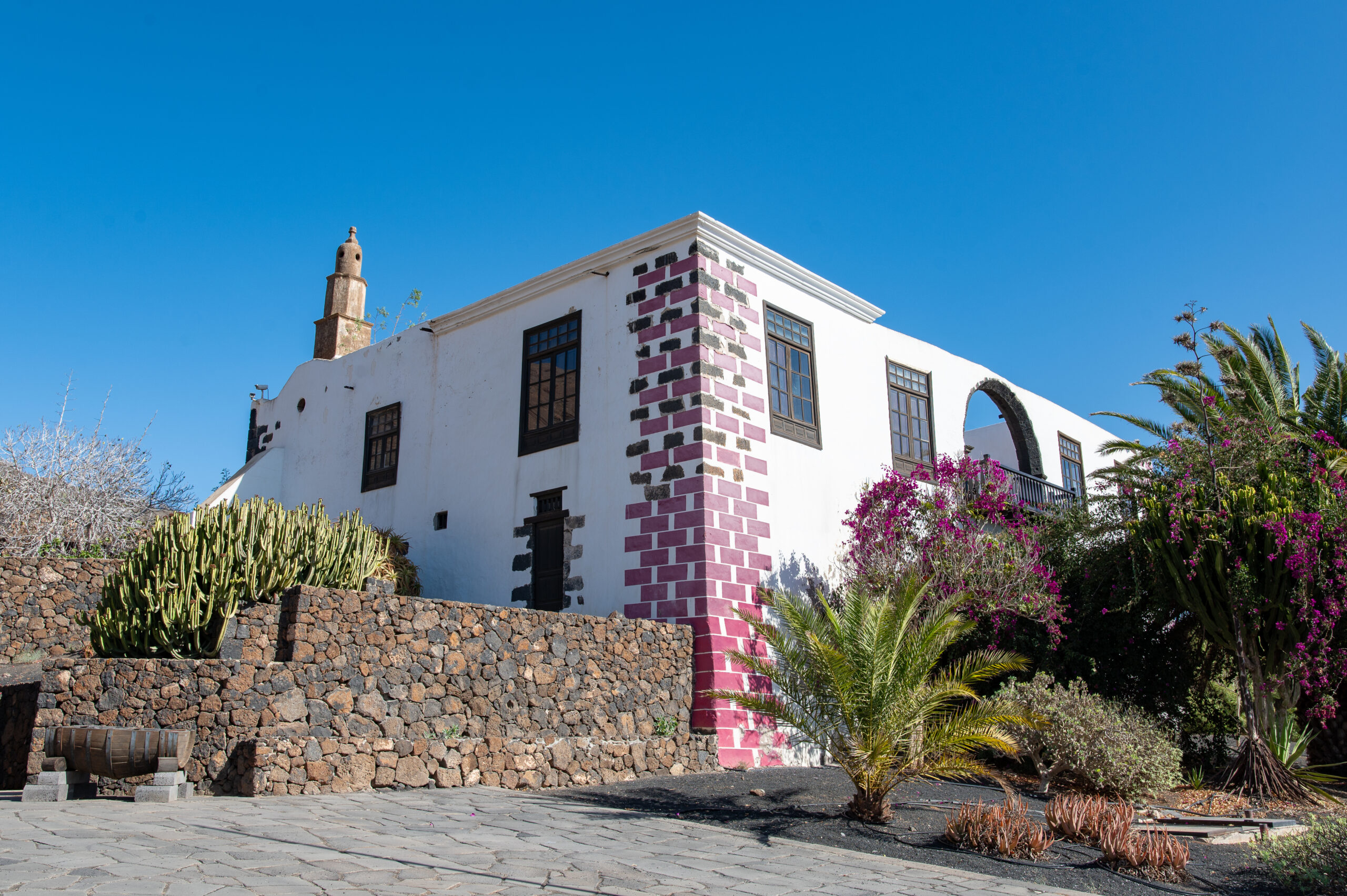
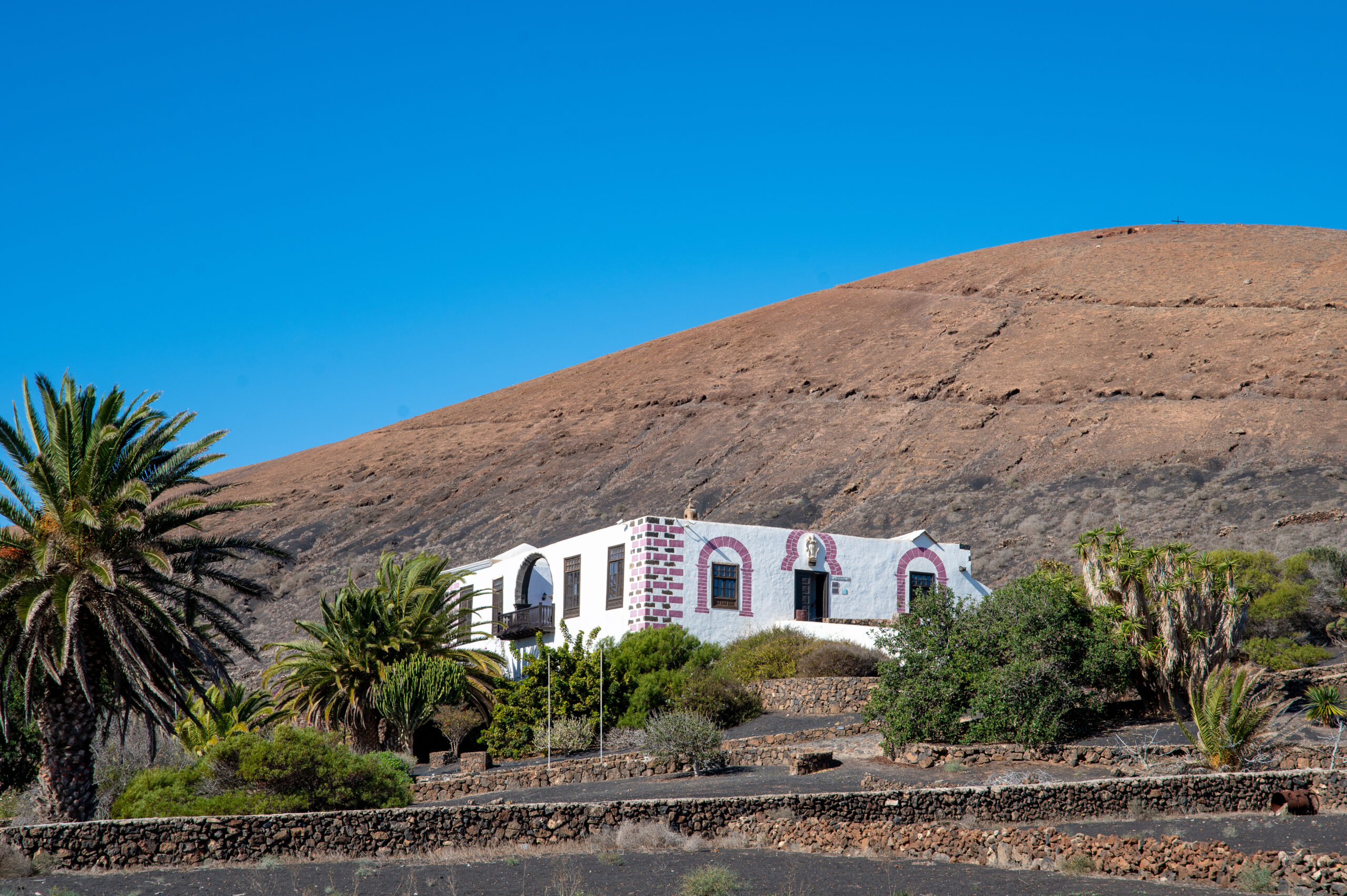
The Casa del Mayor Guerra, declared a Cultural Interest Monument, is an 18th-century historical and cultural treasure in San Bartolomé. Located on the southern slope of Montaña de la Cruz, it marks the point where the town opens towards Montaña Blanca and Tías. This impressive house originally belonged to Francisco Tomás Guerra Clavijo y Perdomo, known as Mayor Guerra, a prominent figure in Lanzarote’s history. He was a military leader, a landowner, and played a significant role in the island’s political and economic development during the late 18th and early 19th centuries.
Legend has it that Mayor Guerra chose this location strategically so that he could oversee the surrounding roads leading to other towns. From this vantage point, he could control the movement of goods and people, reinforcing his influence over the region. The house became a hub for political and economic decisions, making it an important focal point in the community’s history.
Architecturally, Casa del Mayor Guerra showcases the distinctive features of traditional Canarian houses from the 18th century, with thick walls made of volcanic stone and large, high-ceilinged rooms. The house has retained many of its original elements, including its stone façades and wooden balconies, which reflect the craftsmanship of the period. Visitors will notice the simplicity and elegance of its design, which was typical of the grand houses of the Canarian elite during this era.
Inside, the house preserves a number of period details, and its layout is a testament to the functional design of the time. The Casa del Mayor Guerra was not just a residence; it was a symbol of power and prestige in Lanzarote, and its historical significance extends beyond its walls.
Today, Casa del Mayor Guerra remains an essential monument for understanding the socio-political history of San Bartolomé and Lanzarote. It stands as a testament to the legacy of one of the island’s most influential figures, offering visitors a glimpse into a pivotal period in the island’s history.
Did you know…?
Local legends tell of secret tunnels that supposedly connected Casa del Mayor Guerra to other important buildings in the town. These tunnels, while never proven to exist, were said to be used by Mayor Guerra to move discreetly between his home and strategic locations in San Bartolomé. Although no physical evidence of these tunnels has been found, the story continues to fascinate locals and adds an air of mystery to the house’s history.
Landmark #4
Traditional Architecture Walk
C. Tenderete 20 (Mill of Don José María Gil), San Bartolomé (how to get there)
700 m / 9 min from Landmark #3 (Casa del Mayor Guerra)
The Traditional Architecture Walk invites you to discover some of the best examples of traditional Canarian architecture in San Bartolomé. During this walk, you can visit several key landmarks: the House of Don Sebastián Martín Perdomo, the House and Mill of Don Juan Armas Perdomo, and the Mill of Don José María Gil.
The House and Mill of Don Juan Armas Perdomo, built at the beginning of the 20th century, offers insight into the life of this businessman and former mayor of San Bartolomé. The house features a central courtyard and a mill that was purchased in Tenerife in 1910. Don Juan Armas Perdomo operated a grocery store next to the mill, which served the local community from 1910 until 1950.
Close by, the House of Don Sebastián Martín Perdomo, listed in the Municipal Architectural Catalogue, is another outstanding example of Canarian architecture from the early 19th century. Its unique design stands out, with a picturesque façade and an expansive terrace garden bordered by balustrades. The house, which briefly served as a guesthouse around 1930, boasts a prominent central porch supported by semicircular arches.
The final landmark on this architectural route is the Mill of Don José María Gil, also known as the San Bartolomé Mill or Lanzarote Mill, built in 1870. This mill is one of the most iconic examples of traditional Canarian windmills, and it reflects the agricultural heritage of the town, which relied heavily on these structures for the grinding of grain.
Did you know…?
In Spanish, nouns have gender, just like in French and German, but not in English. The word “molino” (mill), which refers to the structures used for grinding grains or cereals into flour, is typically used in its masculine form (“molino”). However, in the Canary Islands, this word is used in both its masculine (“molino”) and feminine (“molina”) forms, with each one applied in different contexts.
The main distinction between a “molina” and a “molino” lies in their size and production capacity. While a “molino” (masculine) is commonly associated with larger, commercial structures, a “molina” (feminine) refers to smaller, more modest mills intended for local or family needs.
Landmark #4
Traditional Architecture Walk
C. Tenderete 20 (Mill of Don José María Gil), San Bartolomé (how to get there)
700 m / 9 min from Landmark #3 (Casa del Mayor Guerra)
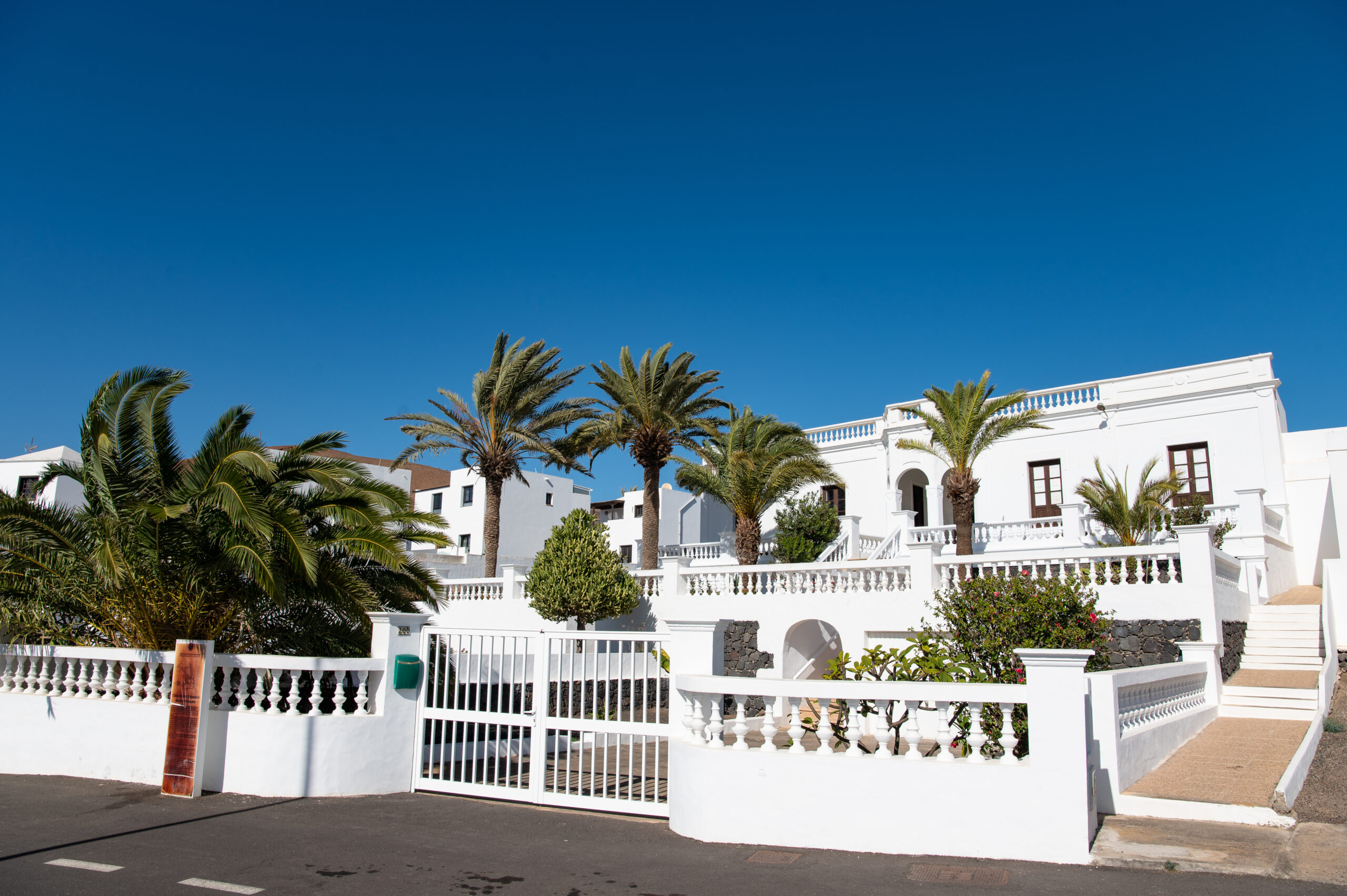
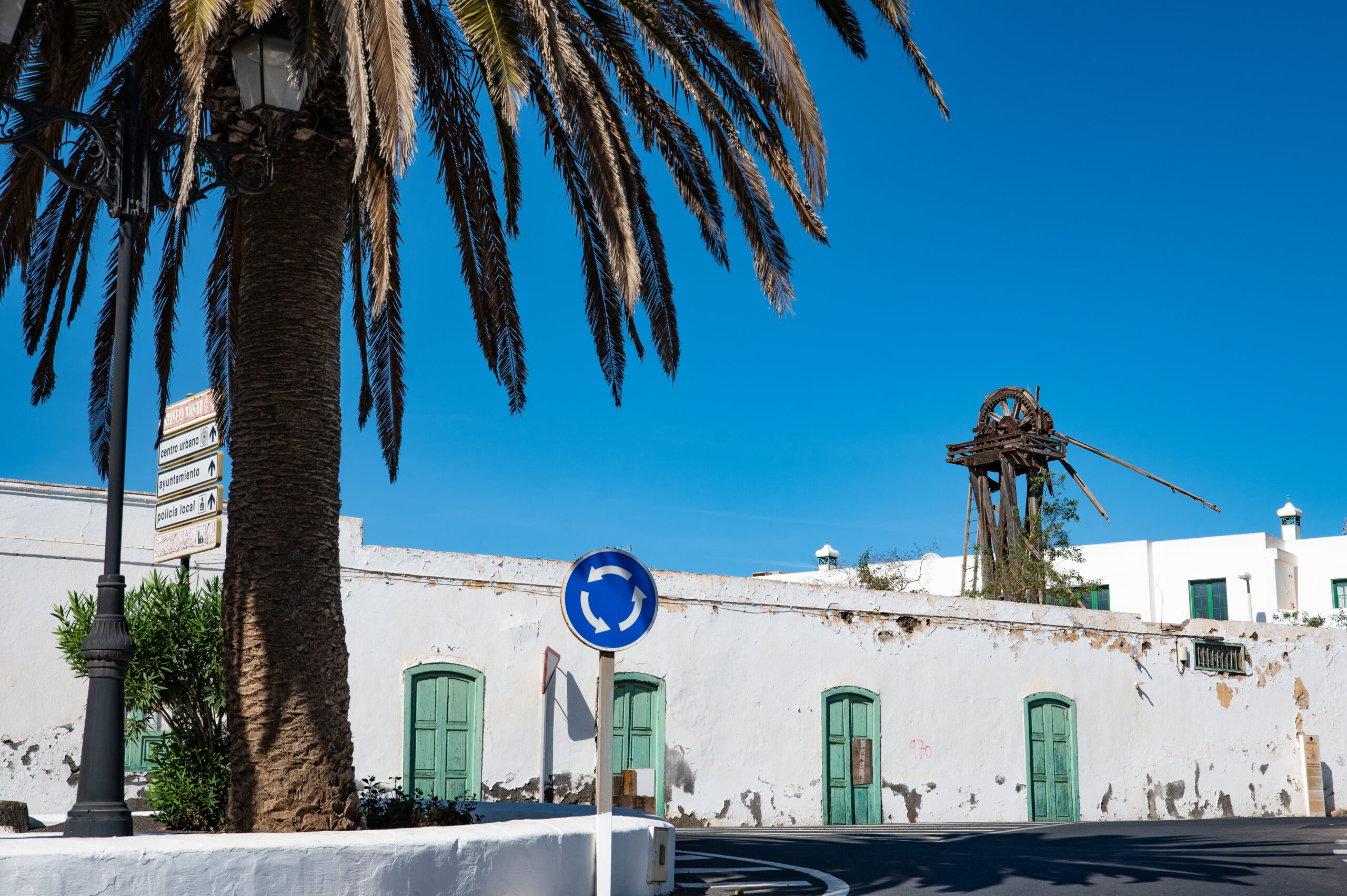
The Traditional Architecture Walk invites you to discover some of the finest examples of traditional Canarian architecture in San Bartolomé. During this walk, you can visit several key landmarks: the House of Don Sebastián Martín Perdomo, the House and Mill of Don Juan Armas Perdomo, and the Mill of Don José María Gil.
The House and Mill of Don Juan Armas Perdomo, built at the beginning of the 20th century, offers insight into the life of this businessman and former mayor of San Bartolomé. The house features a central courtyard and a mill that was purchased in Tenerife in 1910. Don Juan Armas Perdomo operated a grocery store next to the mill, which served the local community from 1910 until 1950.
Close by, the House of Don Sebastián Martín Perdomo, listed in the Municipal Architectural Catalogue, is another outstanding example of Canarian architecture from the early 19th century. Its unique design stands out, with a picturesque façade and an expansive terrace garden bordered by balustrades. The house, which briefly served as a guesthouse around 1930, boasts a prominent central porch supported by semicircular arches.
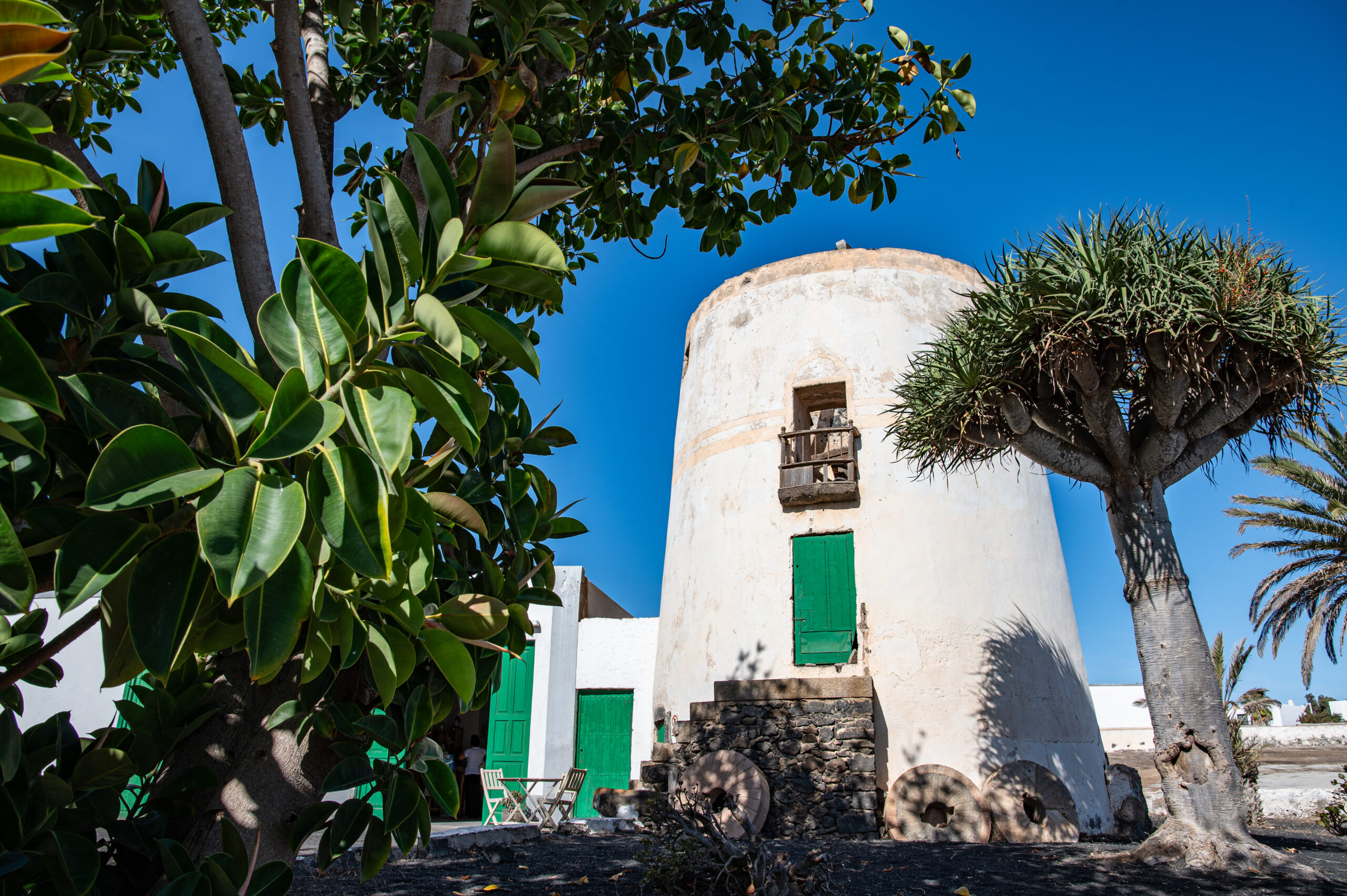
The final landmark on this architectural route is the Mill of Don José María Gil, also known as the San Bartolomé Mill or Lanzarote Mill, built in 1870. This mill is one of the most iconic examples of traditional Canarian windmills, and it reflects the agricultural heritage of the town, which relied heavily on these structures for the grinding of grain.
Did you know…?
In Spanish, nouns have gender, just like in French and German, but not in English. The word “molino” (mill), which refers to the structures used for grinding grains or cereals into flour, is typically used in its masculine form (“molino”). However, in the Canary Islands, this word is used in both its masculine (“molino”) and feminine (“molina”) forms, with each one applied in different contexts.
The main distinction between a “molina” and a “molino” lies in their size and production capacity. While a “molino” (masculine) is commonly associated with larger, commercial structures, a “molina” (feminine) refers to smaller, more modest mills intended for local or family needs.
Landmark #5
Casa Ajei
C. César Manrique 33, San Bartolomé, Lanzarote (how to get there)
400 m / 6 min from Landmark #4 (Mill of Don José María Gil)
The Casa Ajei, built in 1720 as a colonial mansion with a rectangular layout, is one of the most emblematic monuments in all of Lanzarote. Its architectural design, which blends Mediterranean and American influences, offers a unique perspective on the historical and cultural richness of the region. This architectural treasure stands out with its Arab tiles crowning the three- and four-sided roofs, creating a distinctive and unmistakable visual image.
A unique feature of the Casa Ajei is its ochre-colored exterior, a rare characteristic compared to the predominantly white buildings elsewhere on the island. This color choice adds a special dimension to its monumental presence, emphasizing its uniqueness in the local landscape.
The house preserves tangible vestiges of the region’s agricultural past, such as part of the old wine press used for grape pressing, the ancient grain mill, and the cistern that was once used to store the essential resource of water. These evocative elements connect visitors to the historical traditions that have defined life in San Bartolomé over the centuries.
Today, the Casa Ajei has been reimagined as a center for cultural and educational activities, breathing new life into its ancient walls. This multifunctional space not only preserves the island’s historical legacy but also serves as a vibrant venue for cultural and educational events that enrich the experience of visitors. Exploring the Casa Ajei is a journey into the living history of San Bartolomé, where the past and present converge in a fascinating encounter.
Did you know…?
A peculiar detail of the Casa Ajei is the presence of Arab tiles on its roofs, an architectural element that stands out for its uniqueness compared to other buildings on the island, which typically use white tiles. This feature not only enhances the aesthetic of the building but also reveals how foreign architectural styles and influences had already permeated Lanzarote more than 300 years ago.
Landmark #5
Casa Ajei
C. César Manrique 33, San Bartolomé, Lanzarote (how to get there)
400 m / 6 min from Landmark #4 (Mill of Don José María Gil)
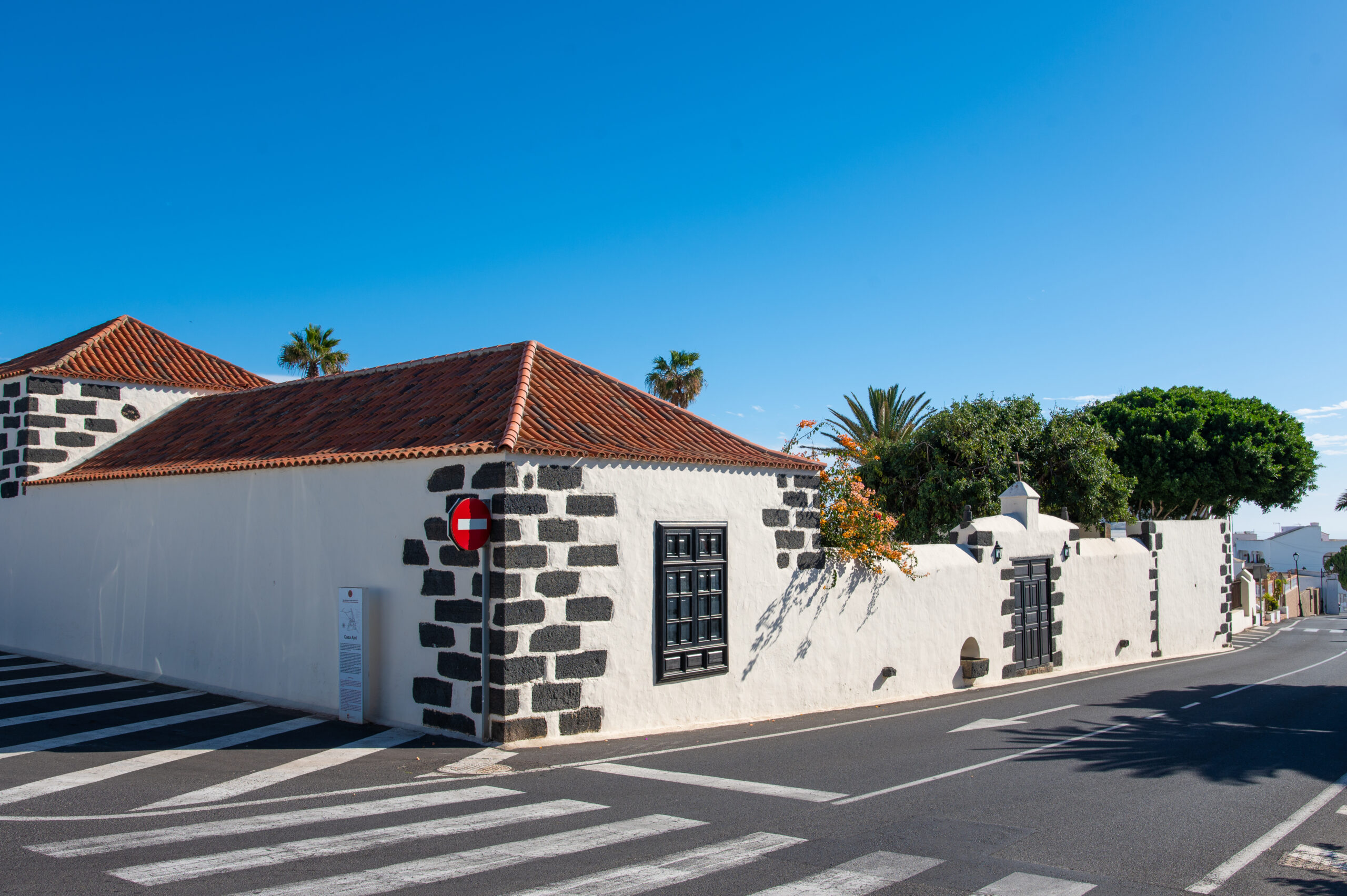
The Casa Ajei, built in 1720 as a colonial mansion with a rectangular layout, is one of the most emblematic monuments in all of Lanzarote. Its architectural design, which blends Mediterranean and American influences, offers a unique perspective on the historical and cultural richness of the region. This architectural treasure stands out with its Arab tiles crowning the three- and four-sided roofs, creating a distinctive and unmistakable visual image.
A unique feature of the Casa Ajei is its ochre-colored exterior, a rare characteristic compared to the predominantly white buildings elsewhere on the island. This color choice adds a special dimension to its monumental presence, emphasizing its uniqueness in the local landscape.
The house preserves tangible vestiges of the region’s agricultural past, such as part of the old wine press used for grape pressing, the ancient grain mill, and the cistern that was once used to store the essential resource of water. These evocative elements connect visitors to the historical traditions that have defined life in San Bartolomé over the centuries.
Today, the Casa Ajei has been reimagined as a center for cultural and educational activities, breathing new life into its ancient walls. This multifunctional space not only preserves the island’s historical legacy but also serves as a vibrant venue for cultural and educational events that enrich the experience of visitors. Exploring the Casa Ajei is a journey into the living history of San Bartolomé, where the past and present converge in a fascinating encounter.
Did you know…?
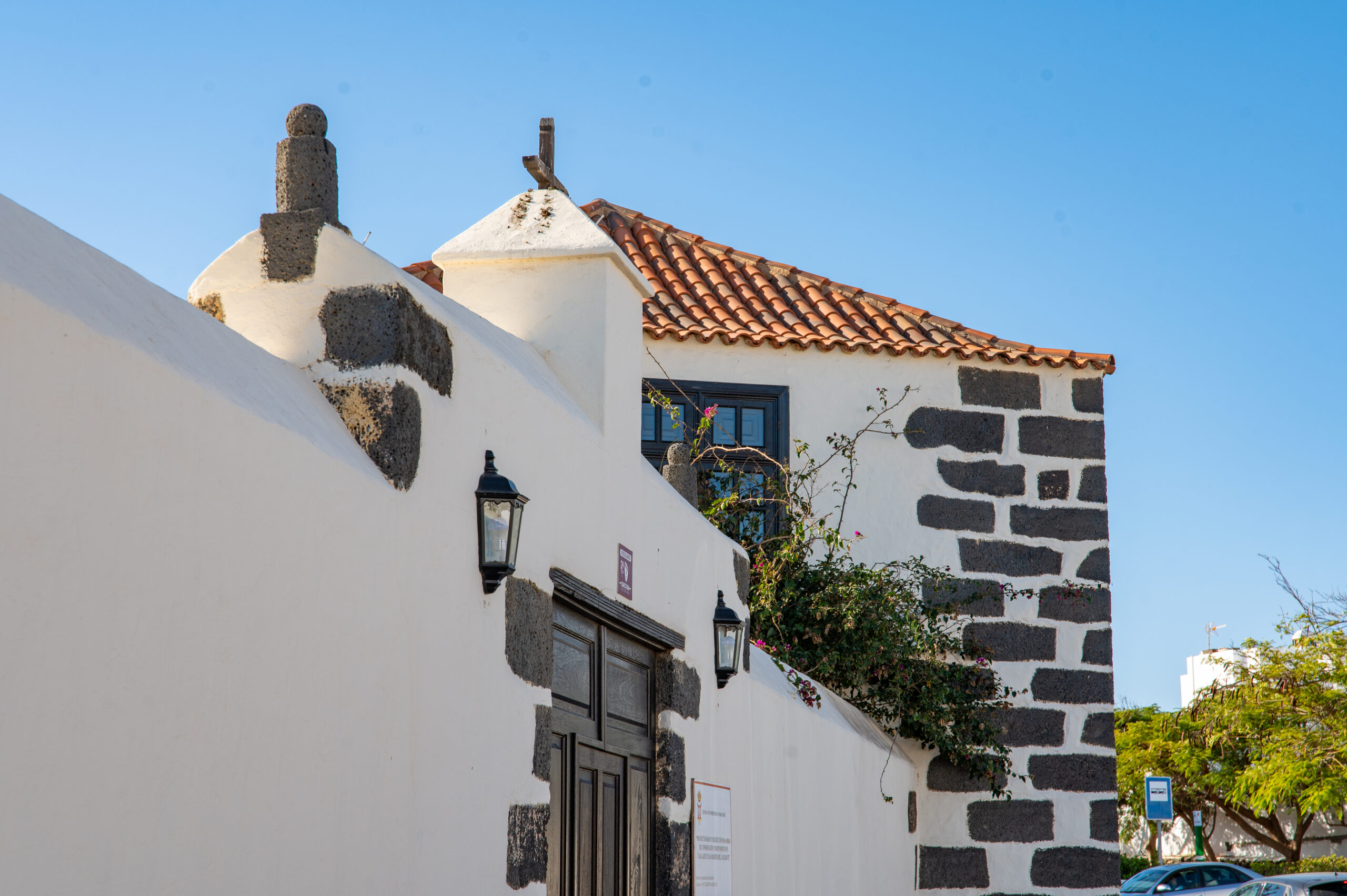
A peculiar detail of the Casa Ajei is the presence of Arab tiles on its roofs, an architectural element that stands out for its uniqueness compared to other buildings on the island, which typically use white tiles. This feature not only enhances the aesthetic of the building but also reveals how foreign architectural styles and influences had already permeated Lanzarote more than 300 years ago.
Landmark #6
Casa Cerdeña
C. Dr. Cerdeña Bethencourt, 17, San Bartolomé (how to get there)
300 m / 5 min from Landmark #5 (Casa Ajei)
Did you know…?
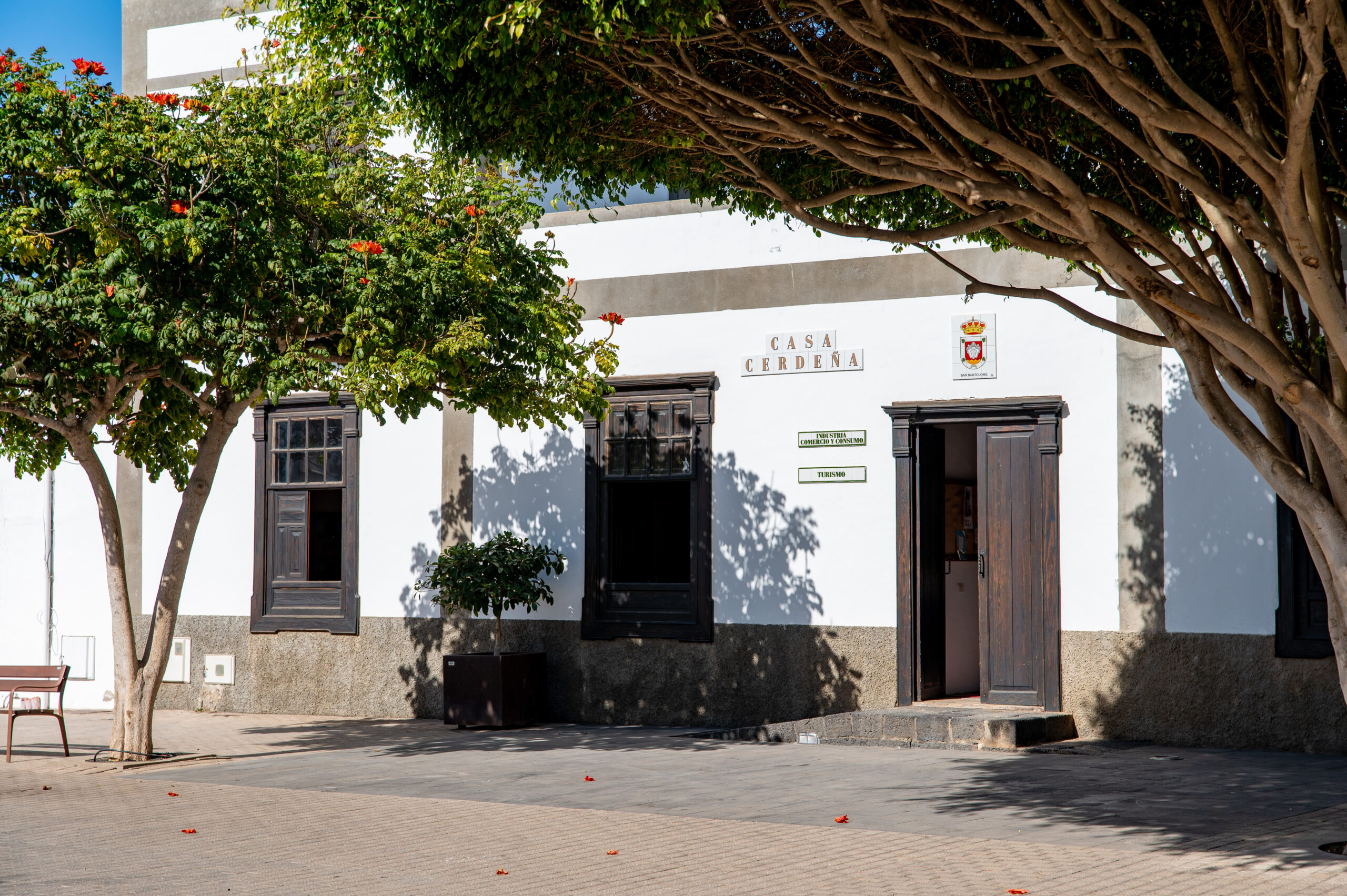
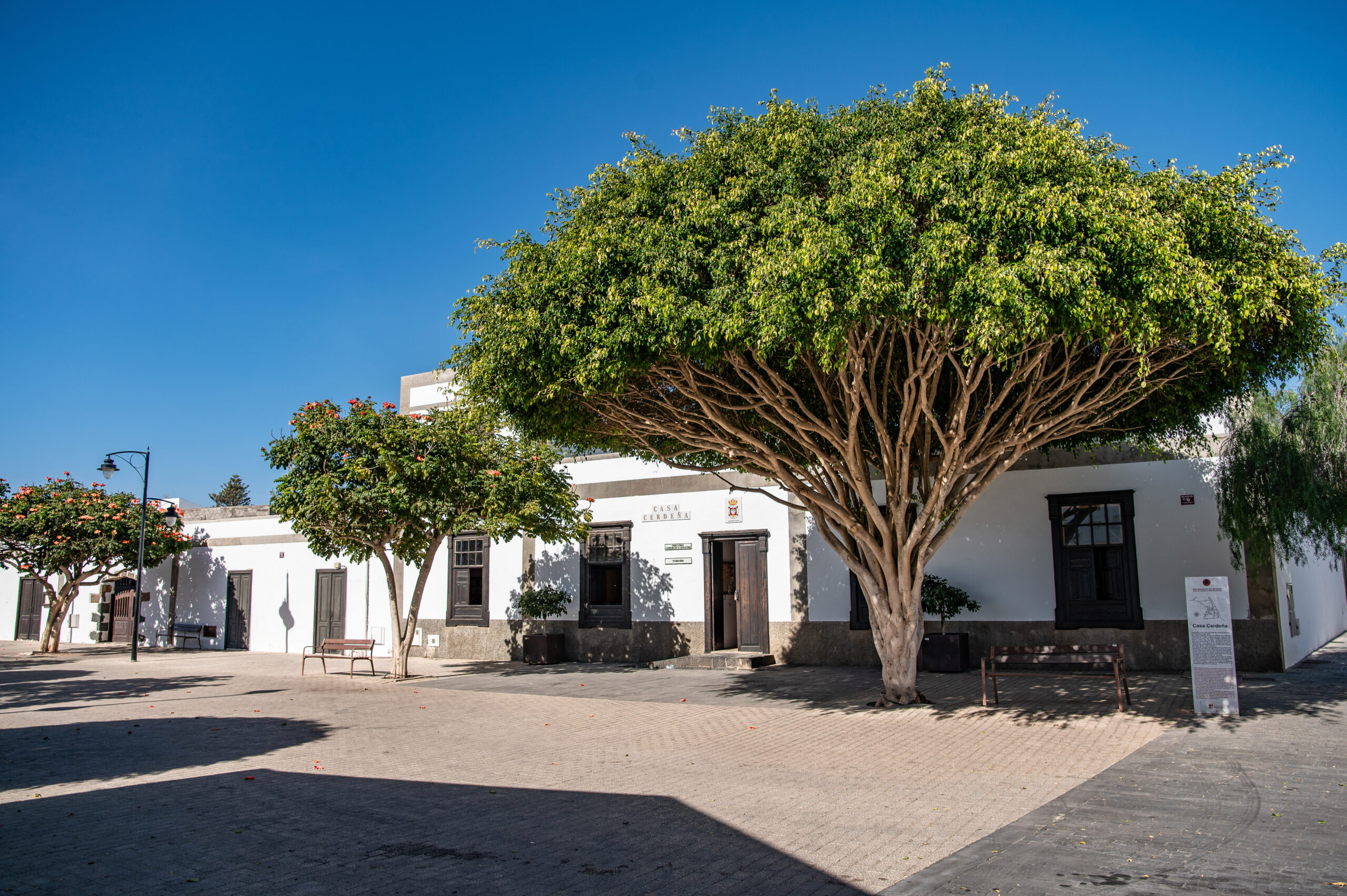
An intriguing curiosity associated with Casa Cerdeña is the story of Don Pedro Cerdeña Armas, the owner and reformer of this distinguished 19th-century mansion. In addition to his role in the architectural renovation, Don Pedro was known as a moneylender in the municipality and across the island of Lanzarote. His influence extended beyond architecture, making him a key figure in local financial transactions.
The dual role of Don Pedro as both a moneylender and the owner of Casa Cerdeña adds an intriguing layer to the historical narrative of this building. The walls of the mansion not only bear witness to the architectural elegance of the era but also echo the financial dealings and business transactions that shaped the economic life of Lanzarote at the time. This curious connection between architecture and finance highlights the complexity of the local history and offers visitors a unique perspective on the multifaceted influence of figures like Don Pedro Cerdeña Armas.
landmark #6
Casa Cerdeña
C. Dr. Cerdeña Bethencourt, 17, San Bartolomé (how to get there)
300 m / 5 min from Landmark #5 (Casa Ajei)
Did you know…?
An intriguing curiosity associated with Casa Cerdeña is the story of Don Pedro Cerdeña Armas, the owner and reformer of this distinguished 19th-century mansion. In addition to his role in the architectural renovation, Don Pedro was known as a moneylender in the municipality and across the island of Lanzarote. His influence extended beyond architecture, making him a key figure in local financial transactions.
The dual role of Don Pedro as both a moneylender and the owner of Casa Cerdeña adds an intriguing layer to the historical narrative of this building. The walls of the mansion not only bear witness to the architectural elegance of the era but also echo the financial dealings and business transactions that shaped the economic life of Lanzarote at the time. This curious connection between architecture and finance highlights the complexity of the local history and offers visitors a unique perspective on the multifaceted influence of figures like Don Pedro Cerdeña Armas.
Landmark #7
Tanit Ethnographic Museum
C. Constitución 1, San Bartolomé, Lanzarote (how to get there)
160 m / 2 min from Landmark #6 (Casa Cerdeña)
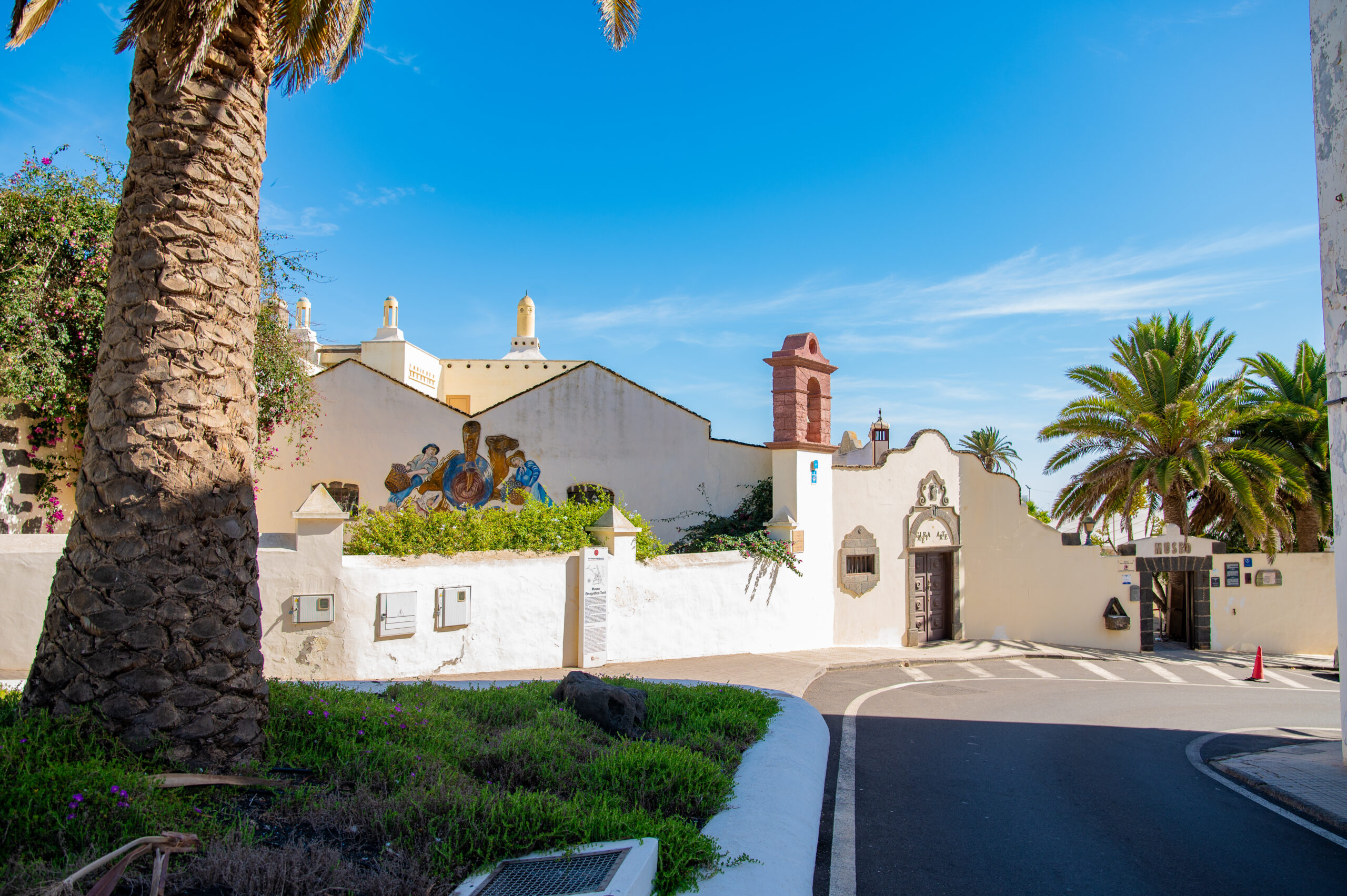
The Tanit Ethnographic Museum, located in one of the island’s oldest bodegas (wineries), which is over 300 years old, and in an 18th-century Canarian house, offers a captivating journey through the cultural richness of San Bartolomé and the entire island of Lanzarote. As an ethnographic museum, its purpose is to preserve and showcase the valuable heritage of the island, offering a comprehensive view of its history, traditions, and folklore.
In this unique museum, the word “ethnographic” comes to life as visitors explore the carefully curated collection that represents the daily life of past generations. From agricultural tools to traditional clothing and everyday objects, the Tanit Ethnographic Museum reveals the diversity and uniqueness of Lanzarote’s culture.
The old winery and Canarian house that house the museum provide an authentic context, immersing visitors in a journey through time that goes beyond mere observation, allowing them to connect meaningfully with the roots of the community.
This museum not only displays artifacts but also provides an educational experience that highlights the intrinsic value of ethnography, enriching visitors’ understanding and appreciation of Lanzarote’s local history and deeply rooted customs.
Did you know…?
The old Canarian house that hosts the Tanit Museum is not just a museum space but also a living testament to architectural evolution over the centuries. The house, built in the 18th century, retains many original architectural elements that reveal its history, such as its spectacular central courtyard, a hallmark of Canarian architecture. This fusion of architectural history and ethnographic content creates a unique experience where form and function harmoniously intertwine for the delight of its visitors.
Landmark #7
Tanit Ethnographic Museum
C. Constitución 1, San Bartolomé, Lanzarote (how to get there)
160 m / 2 min from Landmark #6 (Casa Cerdeña)
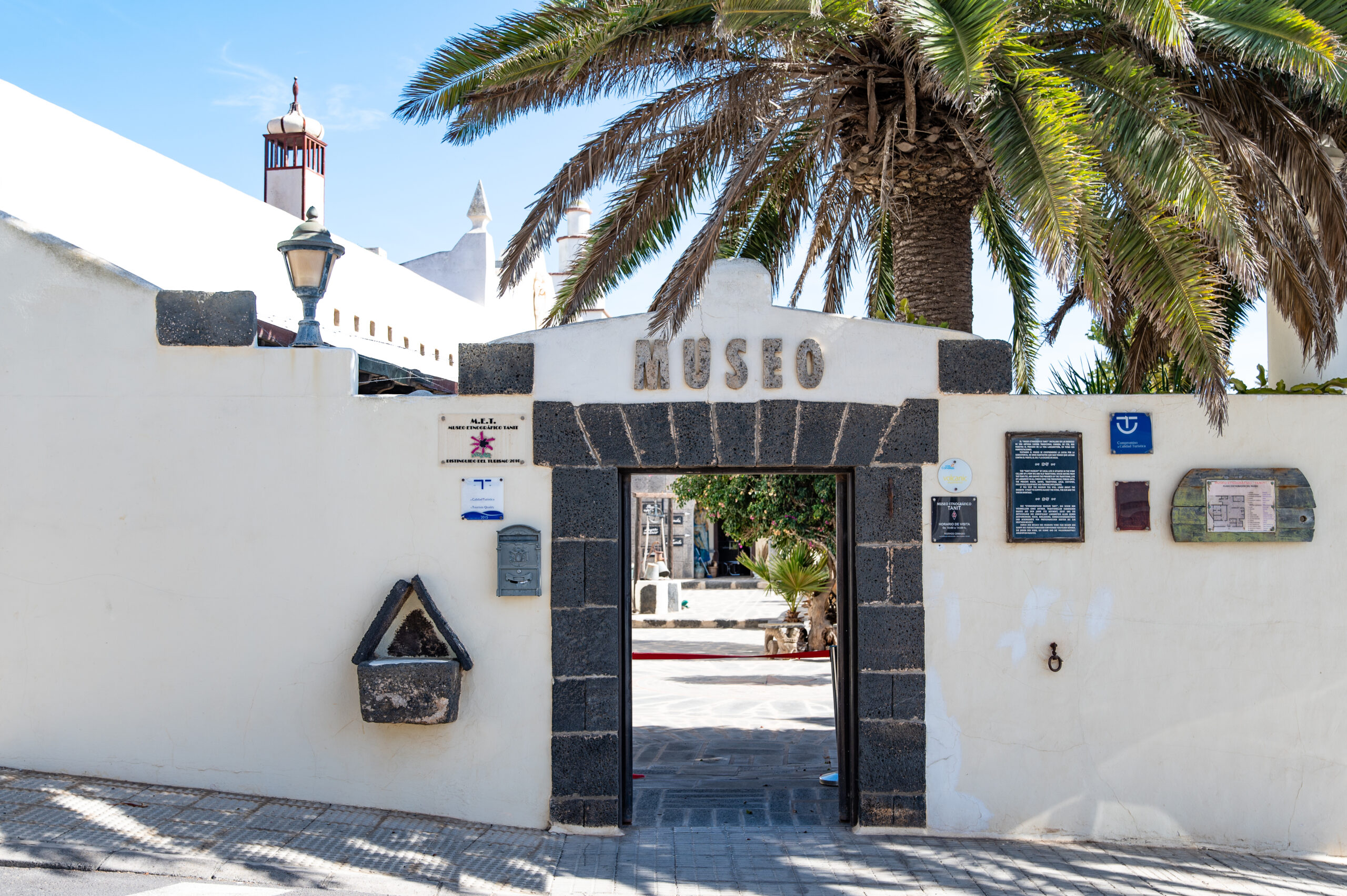
The Tanit Ethnographic Museum, located in one of the island’s oldest bodegas (wineries), which is over 300 years old, and in an 18th-century Canarian house, offers a captivating journey through the cultural richness of San Bartolomé and the entire island of Lanzarote. As an ethnographic museum, its purpose is to preserve and showcase the valuable heritage of the island, offering a comprehensive view of its history, traditions, and folklore.
In this unique museum, the word “ethnographic” comes to life as visitors explore the carefully curated collection that represents the daily life of past generations. From agricultural tools to traditional clothing and everyday objects, the Tanit Ethnographic Museum reveals the diversity and uniqueness of Lanzarote’s culture.
The old winery and Canarian house that house the museum provide an authentic context, immersing visitors in a journey through time that goes beyond mere observation, allowing them to connect meaningfully with the roots of the community.
This museum not only displays artifacts but also provides an educational experience that highlights the intrinsic value of ethnography, enriching visitors’ understanding and appreciation of Lanzarote’s local history and deeply rooted customs.
Did you know…?
The old Canarian house that hosts the Tanit Museum is not just a museum space but also a living testament to architectural evolution over the centuries. The house, built in the 18th century, retains many original architectural elements that reveal its history, such as its spectacular central courtyard, a hallmark of Canarian architecture. This fusion of architectural history and ethnographic content creates a unique experience where form and function harmoniously intertwine for the delight of its visitors.
